Description
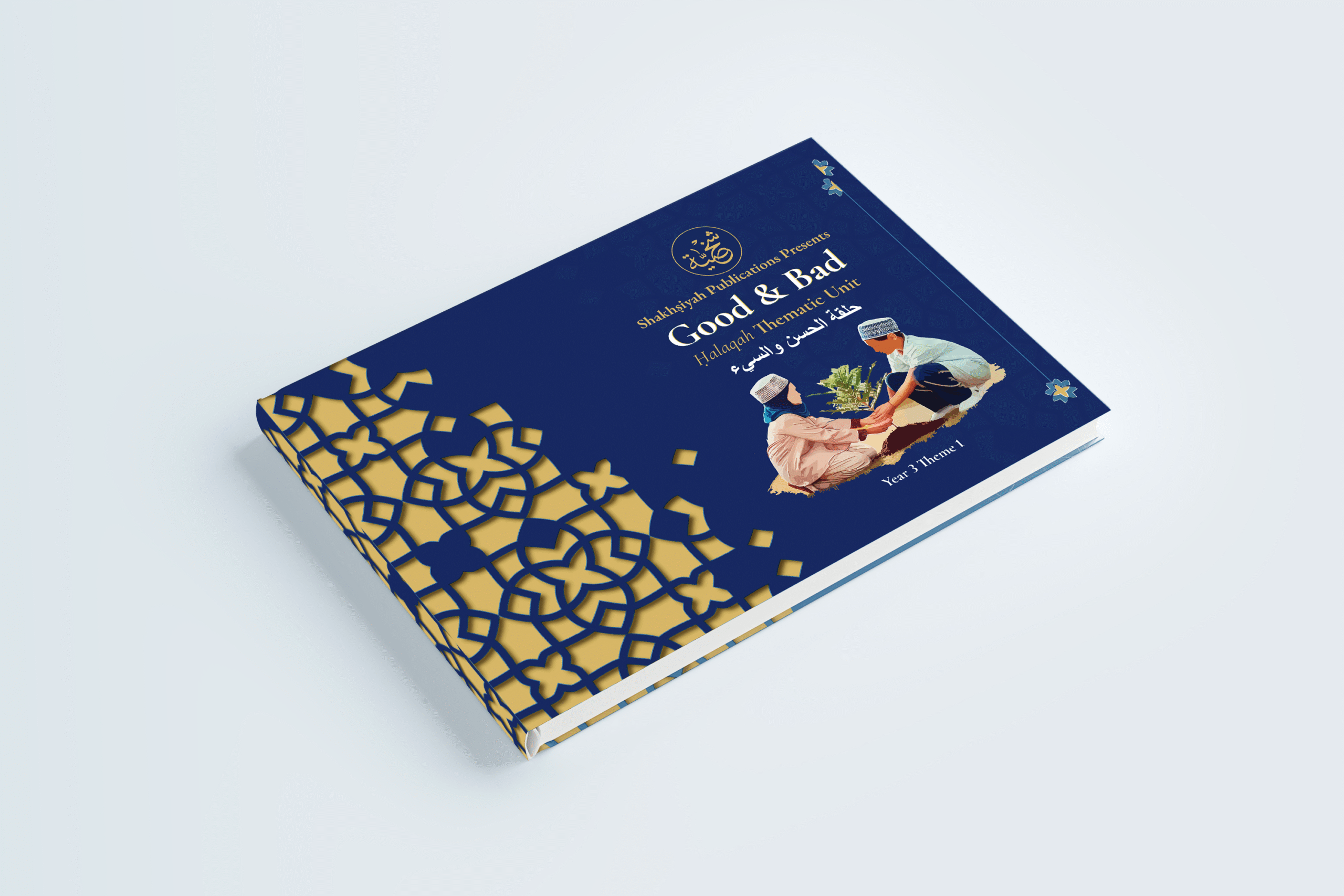
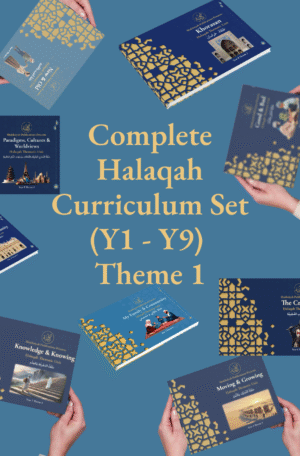
Good & Bad is a thematic ḥalaqah unit designed for ages 7-8. It invites learners to explore foundational Islamic understandings of good and bad, right and wrong, and what it means to choose what is pleasing to Allah. Through this journey, they reflect on how Allah has honoured human beings with free will and the capacity to love goodness and reject wrongdoing. The theme introduces the concept of shakhṣiyyah—each person’s unique character and disposition—encouraging learners to begin shaping their individual identities through the framework of Islamic akhlāq (moral and ethical character). Students examine how our beliefs, intentions, and inner qualities influence our external behaviour, and how cultivating virtues (fadā’il) such as honesty, mercy, justice, and sincerity is part of becoming a good human being and a good Muslim. Grounded in core Islamic teachings such as the six pillars of īmān and the five pillars of Islam, the theme connects moral choices to one’s relationship with Allah. Learners begin to develop an understanding of ihsān by reflecting on their own actions through the lens of niyyah (intention) and ikhlās (sincerity), highlighting the importance of doing good not just outwardly, but with a pure heart. Through stories, discussions, and reflection, learners consider that Allah created each of us with unique strengths and qualities, and that building a beautiful shakhṣiyyah means nurturing those gifts. Drawing upon the character of the Prophet ﷺ, students explore how key moral traits manifest in different ways in different people, and how good character is lived out in real life, through both individual growth and social responsibility.
Please note: Although each unit is written with a specific age group in mind, all of our units are highly adaptable and can be used effectively across multiple age ranges — right up to adult learners.
How does ḥalaqah work?
- Ḥalaqah is the pedagogy used by Prophet Muhammad (saw).
- During ḥalaqah, the educator and learners sit together on the floor, in a circle facing each other.
- Ḥalaqah begins with Bismillah and Qur’ān recitation and ends with a group duʿā’ which connects to the topic that has been discussed.
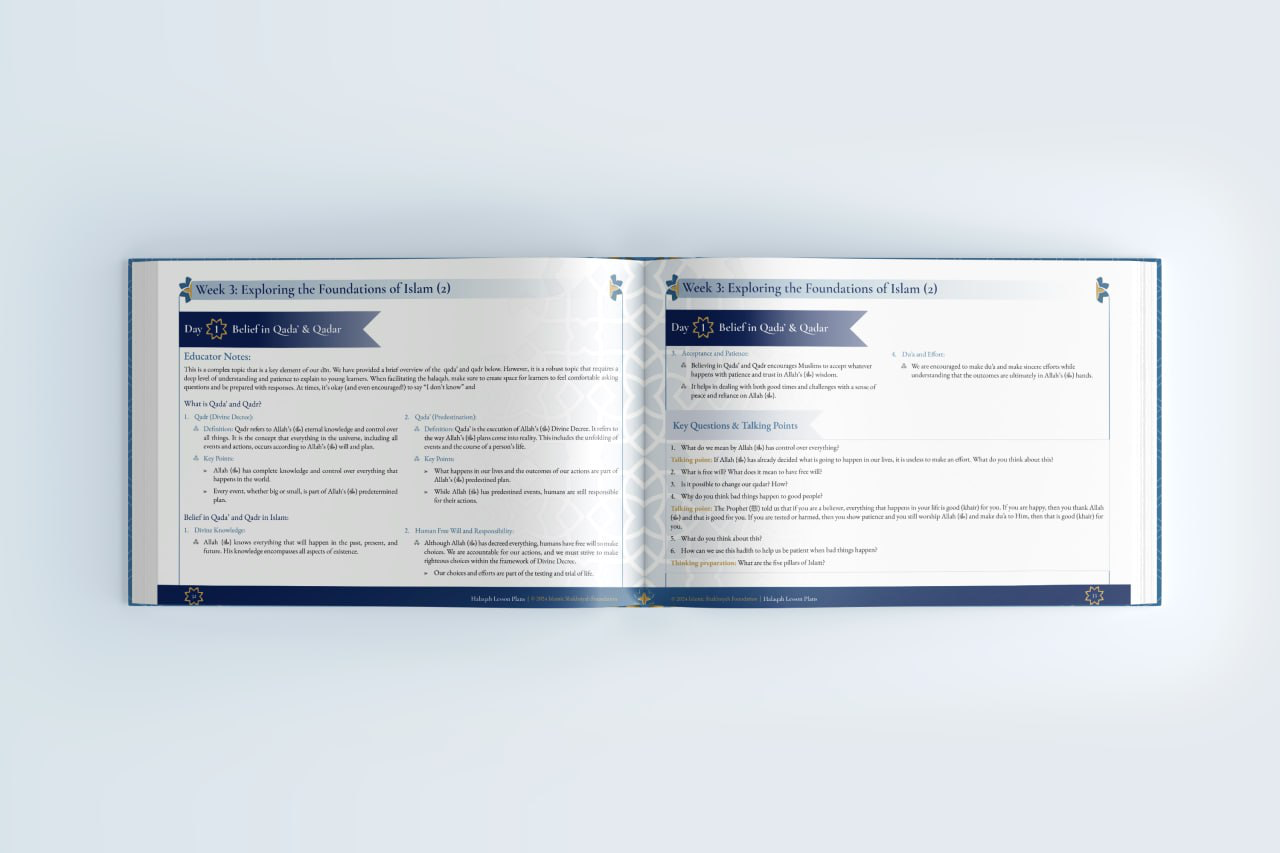
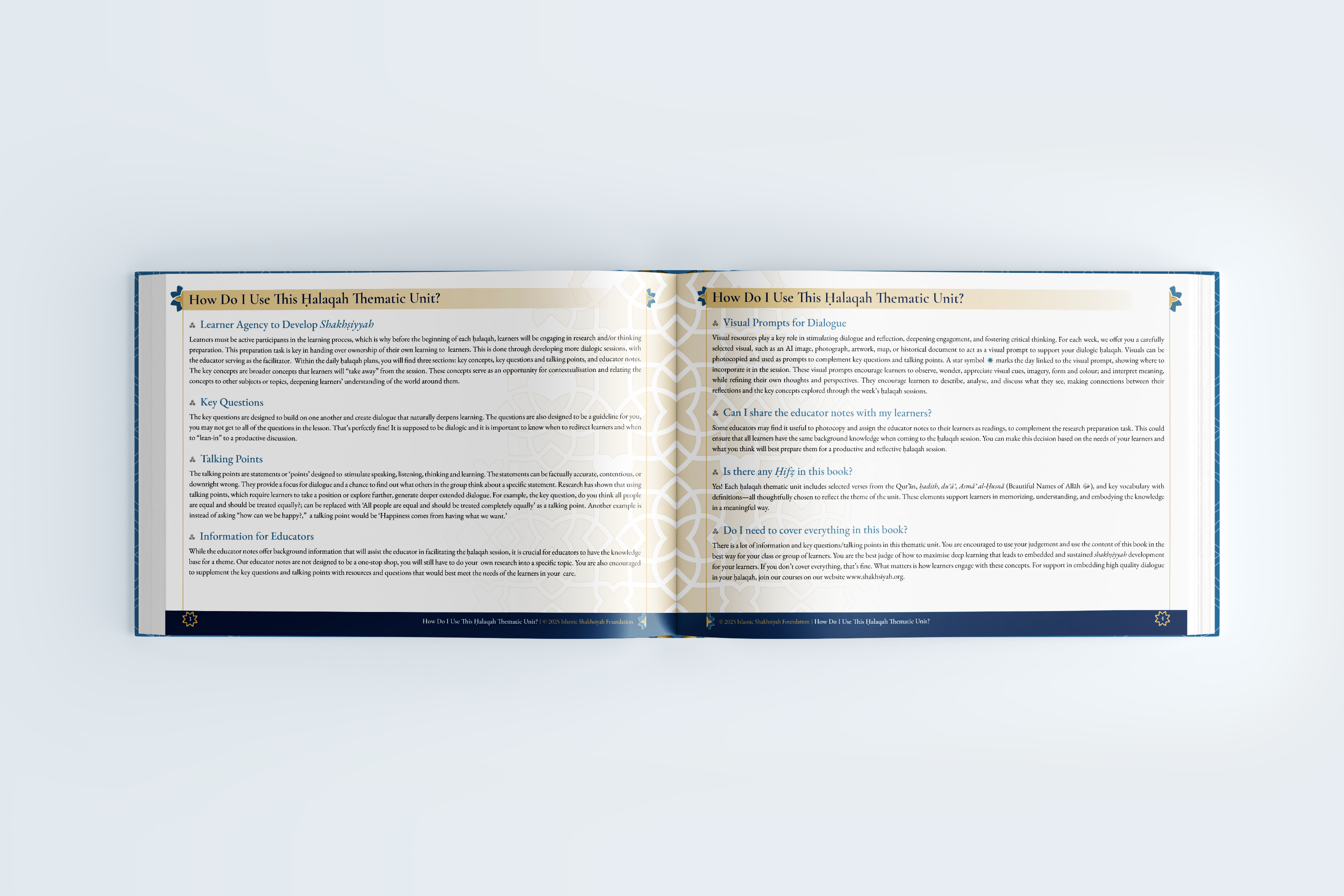
- All learners are encouraged to participate. Our ḥalaqah is dialogic – this means that learners engage in extended discussion amongst themselves with educators facilitating the dialogue through key questions and talking points.
- There is always room for direct instruction and storytelling, both of which are important. However, the main objective is to learn through dialogue drawing on the learners’ existing knowledge and building on it.
- Educators are primarily responsible for contextualization of the information in a way that meets the needs of their learners.
Please refer to our Dialogic Ḥalaqah: A Guide for the Muslim Educator on our website for more information about setting up ḥalaqah.
Need support with implementation? Our Dialogic Halaqah courses are carefully designed to support the effective implementation of our curriculum. They equip Islamic educators with the knowledge, confidence, and practical skills to bring dialogic halaqah into their classrooms and to nurture the shakhsiyah Islamiyah (Muslim personhood) of each learner through meaningful, reflective dialogue.
Explore our full range of courses here: https://ielc.learnworlds.com/courses
Reviews
There are no reviews yet.