Description
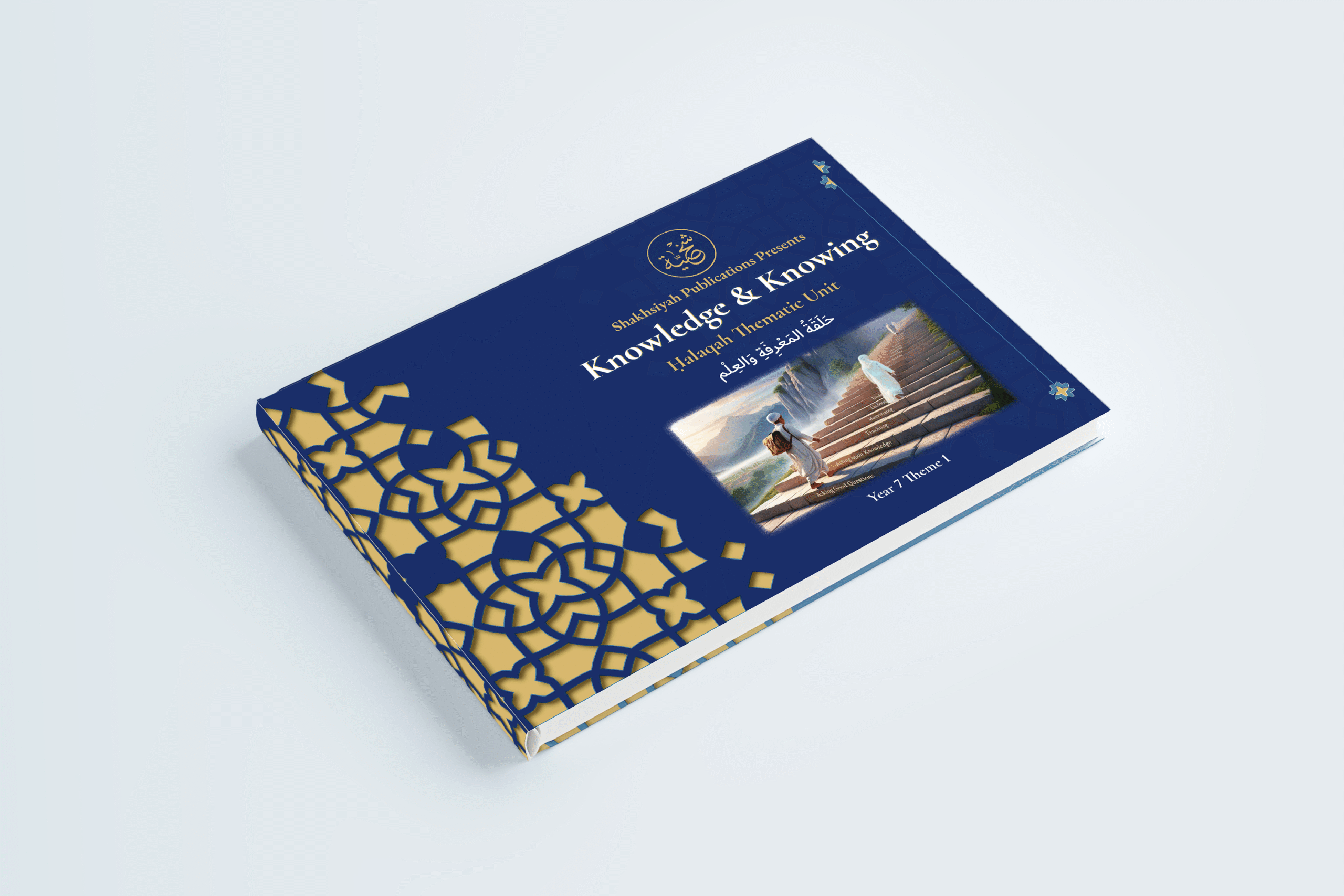
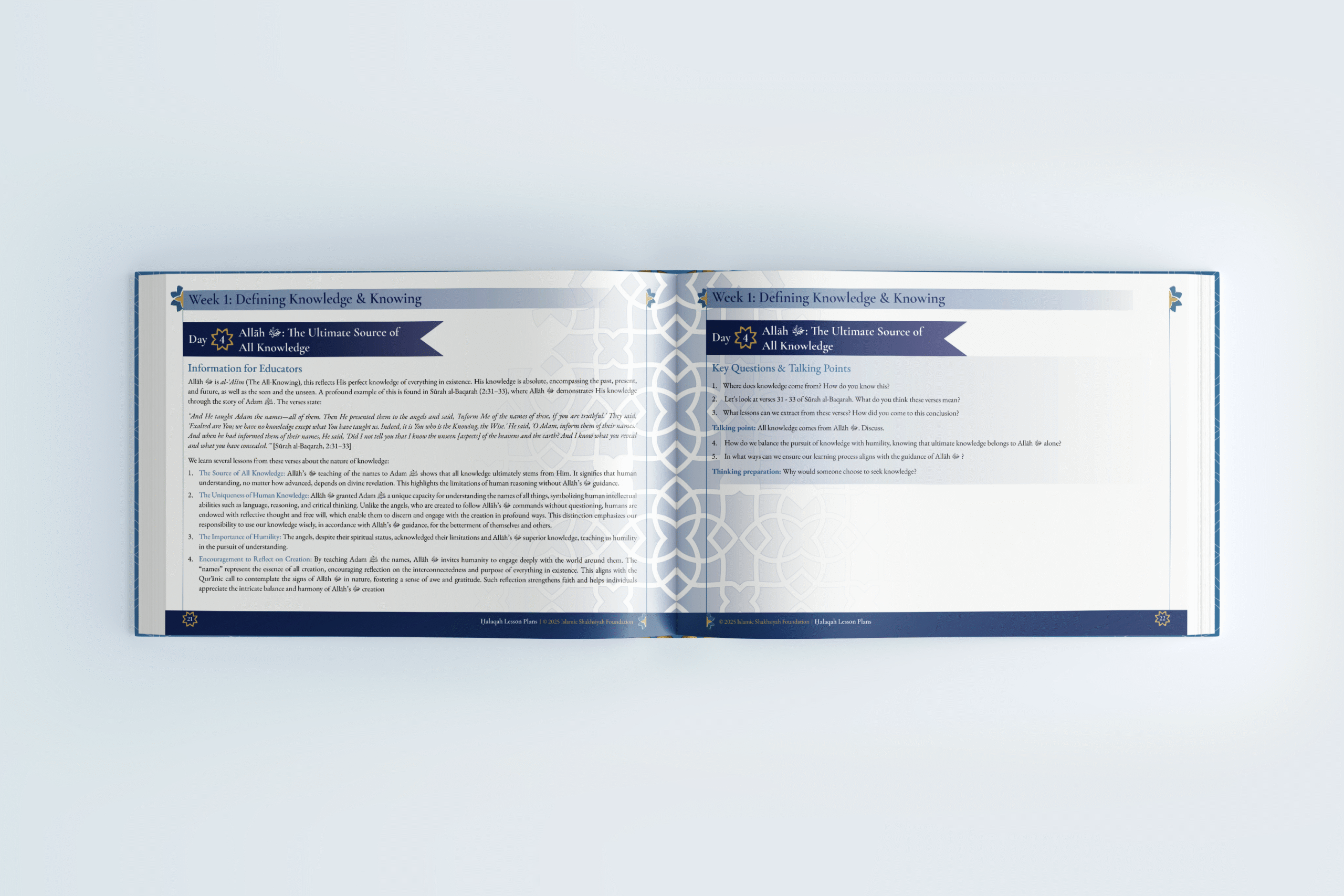
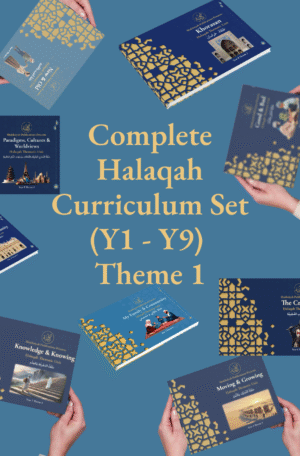
Knowledge & Knowing” is a ḥalaqah thematic unit designed for learners aged 11-12. This thematic unit delves into the profound concept of ʿilm (knowledge), exploring the acquisition, sources, and implications of the active act of knowledge and knowing. Grounded in Islamic teachings, this unit nurtures the learner’s understanding of knowledge as both a means to draw closer to Allāh ﷻ and a tool for navigating the world with wisdom and sincerity. The journey begins by defining knowledge and knowing. Learners explore the Qurʾānic and Prophetic emphasis on seeking knowledge, reflecting on the verse:
“Read in the name of your Lord who created—created man from a clinging substance. Read, and your Lord is the Most Generous—Who taught by the pen—taught man that which he knew not.” [Sūrah al-ʿAlaq, 96: 1–5].
Learners explore multiple pathways to knowledge: revelation (waḥy), intellect (ʿaql), heart (qalb), and sensory experience. Discussions highlight the distinction between beneficial knowledge and knowledge that leads to arrogance, reinforcing the importance of intellectual humility—acknowledging the limits of one’s understanding and remaining open to learning. The ḥadīth, “Whoever Allāh wishes good for, He gives him understanding of the Religion” (Bukhārī & Muslim), emphasizes knowledge as a divine gift that must be sought with sincerity (ʾikhlāṣ). Learners reflect on the adab of seeking knowledge—purifying intentions, asking meaningful questions, and practicing waraʿ (cautiousness). The concepts of intellectual curiosity and intellectual humility are weaved throughout the unit, allowing learners to reflect on their roles in pursuing truth with sincerity while recognizing the vastness of what they do not yet know. A key component of this journey is the ḥalaqah space, where students engage in dialogue, critically examine ideas, and lead discussions. They explore the ethics of knowledge, the difference between farḍ ʿayn and farḍ kifāyah (individual and communal obligations) in learning, and how past civilizations flourished through knowledge.
The unit encourages a holistic approach to knowledge, integrating both sacred and worldly learning. Learners explore maʿrifah (deep knowing of Allāh ﷻ), the role of doubt in strengthening faith, and the balance between knowledge and action. They also reflect on the responsibility of knowledge—how it shapes character, influences decisions, and serves the greater good.
Please note: Although each unit is written with a specific age group in mind, all of our units are highly adaptable and can be used effectively across multiple age ranges — right up to adult learners.
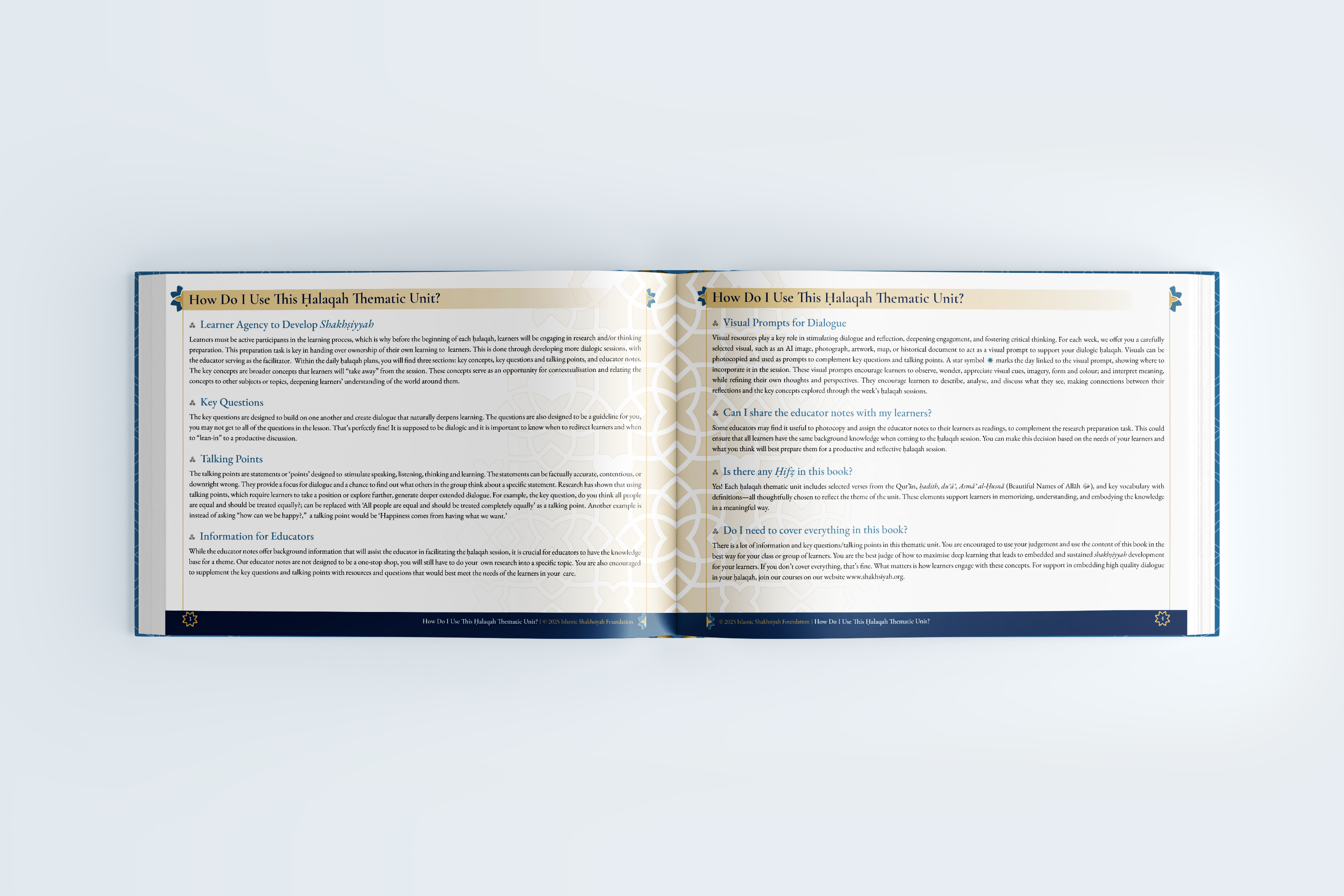
How does ḥalaqah work?
- Ḥalaqah is the pedagogy used by Prophet Muhammad (saw).
- During ḥalaqah, the educator and learners sit together on the floor, in a circle facing each other.
- Ḥalaqah begins with Bismillah and Qur’ān recitation and ends with a group duʿā’ which connects to the topic that has been discussed.
- All learners are encouraged to participate. Our ḥalaqah is dialogic – this means that learners engage in extended discussion amongst themselves with educators facilitating the dialogue through key questions and talking points.
- There is always room for direct instruction and storytelling, both of which are important. However, the main objective is to learn through dialogue drawing on the learners’ existing knowledge and building on it.
- Educators are primarily responsible for contextualization of the information in a way that meets the needs of their learners.
Please refer to our Dialogic Ḥalaqah: A Guide for the Muslim Educator on our website for more information about setting up ḥalaqah.
Need help with implementation? Our Dialogic Halaqah courses are carefully designed to support the effective implementation of our curriculum. They equip Islamic educators with the knowledge, confidence, and practical skills to bring dialogic halaqah into their classrooms and to nurture the shakhsiyah Islamiyah (Muslim personhood) of each learner through meaningful, reflective dialogue. Elevate your practice and explore our full range of courses here: https://ielc.learnworlds.com/courses
Reviews
There are no reviews yet.