Description
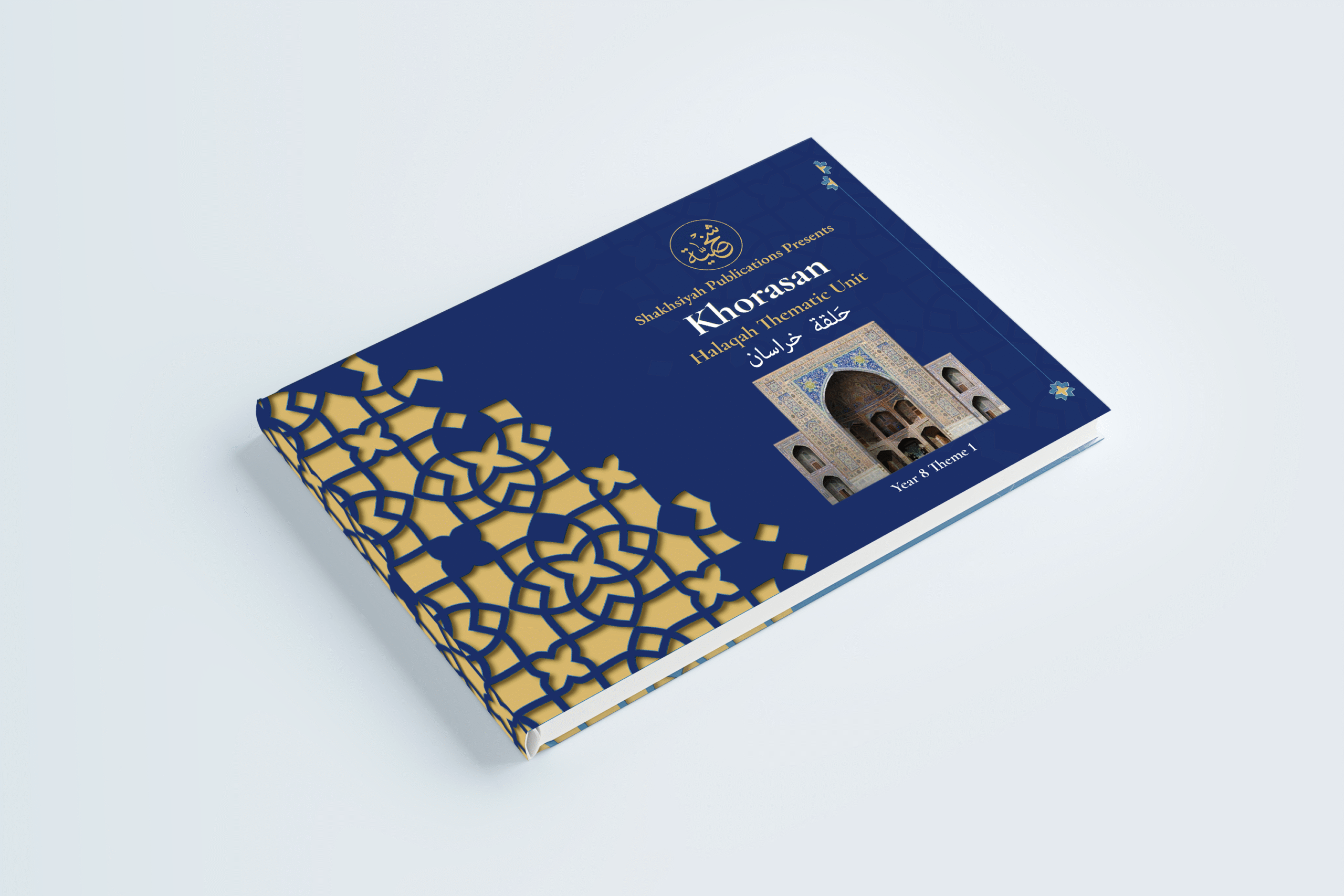
Khorasan is a ḥalaqah thematic unit designed for learners aged 11–12 that delves into the rich historical, cultural and intellectual heritage of Khorasan. This unit explores how this historic region became a vibrant hub of scholarship, science, art, and cultural interchange. We explore the transformation of Khorasan through conquests, political shifts, and the blending of culture and traditions.
Our thematic journey begins with the geography of Khorasan, its historical significance, and the impact of the early Muslim conquests. Learners analyse the fall of the Sassanid Empire, reflecting on hadith such as “Kisra will perish, and there will be no Kisra after him…” (Ṣaḥīḥ Muslim). They explore why Khorasan became a centre of knowledge, cultural exchanges and synthesis of traditions. We explore how its architecture reflects its intellectual and spiritual legacy. We investigate local reactions to the Muslim conquest and ask, “Why study Khorasan?”.
We then shift our focus to the scholars who emerged from Khorasan, particularly scholars of Ḥadīth and their enduring legacy in scholarly innovation and preserving knowledge. Learners explore the concept of riḥla (physical journeys of knowledge seeking) through historical inquiries into the biographies of influential figures such as Imam al-Ghazāli and Imam al-Bukhāri, emphasizing not only their scholarly contributions but also the adāb (etiquette) that shaped scholarship and lives. Through examining the sciences of isnād and ʿilm al-rijāl, learners discover why biographies matter in authenticating historical narrations and understanding Islamic heritage. We explore how these scholars’ lives illuminate with the Qur’ānic teaching: “Say, ‘Are those who know equal to those who do not know?’ Only those of understanding will take heed.” (Surah al-Zumar, 39:9)
A critical component of the unit is the practical application of these lessons through a Historical Inquiry Project, where learners research, construct timelines, and create character sketches to build a comprehensive understanding of a Khorasani scholar of their choice. This project encourages critical analysis and the verification of information, fostering intellectual curiosity and humility. They study how historical sources can be critically evaluated and consider the different approaches to the study of history in the Islamic and ‘western’ scholarly traditions.
Guided by Qur’ānic wisdom and prophetic traditions, learners are reminded: “Whoever travels a path in search of knowledge, Allah will make easy for him a path to Paradise.” (Ṣaḥīḥ Muslim) This thematic unit inspires learners to appreciate how context shapes learning and understanding and to honour the legacy of Khorasan as a beacon of knowledge.
Please note: Although each unit is written with a specific age group in mind, all of our units are highly adaptable and can be used effectively across multiple age ranges — right up to adult learners.
How does ḥalaqah work?
- Ḥalaqah is the pedagogy used by Prophet Muhammad (saw).
- During ḥalaqah, the educator and learners sit together on the floor, in a circle facing each other.
- Ḥalaqah begins with Bismillah and Qur’ān recitation and ends with a group duʿā’ which connects to the topic that has been discussed.
- All learners are encouraged to participate. Our ḥalaqah is dialogic – this means that learners engage in extended discussion amongst themselves with educators facilitating the dialogue through key questions and talking points.
- There is always room for direct instruction and storytelling, both of which are important. However, the main objective is to learn through dialogue drawing on the learners’ existing knowledge and building on it.
- Educators are primarily responsible for contextualization of the information in a way that meets the needs of their learners.
Need help with implementation? Our Dialogic Halaqah courses are carefully designed to support the effective implementation of our curriculum. They equip Islamic educators with the knowledge, confidence, and practical skills to bring dialogic halaqah into their classrooms and to nurture the shakhsiyah Islamiyah (Muslim personhood) of each learner through meaningful, reflective dialogue. Elevate your practice and explore our full range of courses here: https://ielc.learnworlds.com/courses
Reviews
There are no reviews yet.