Description
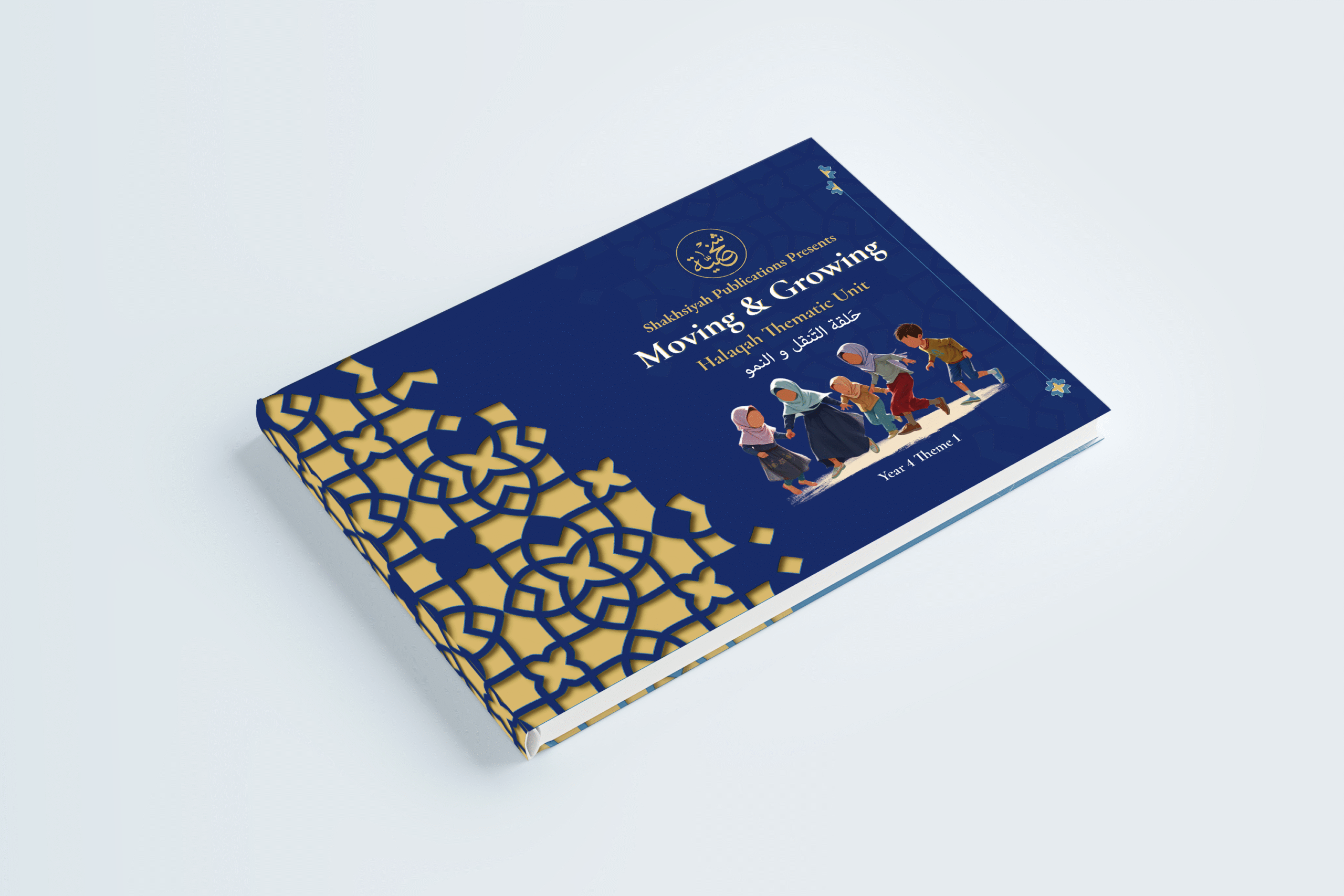
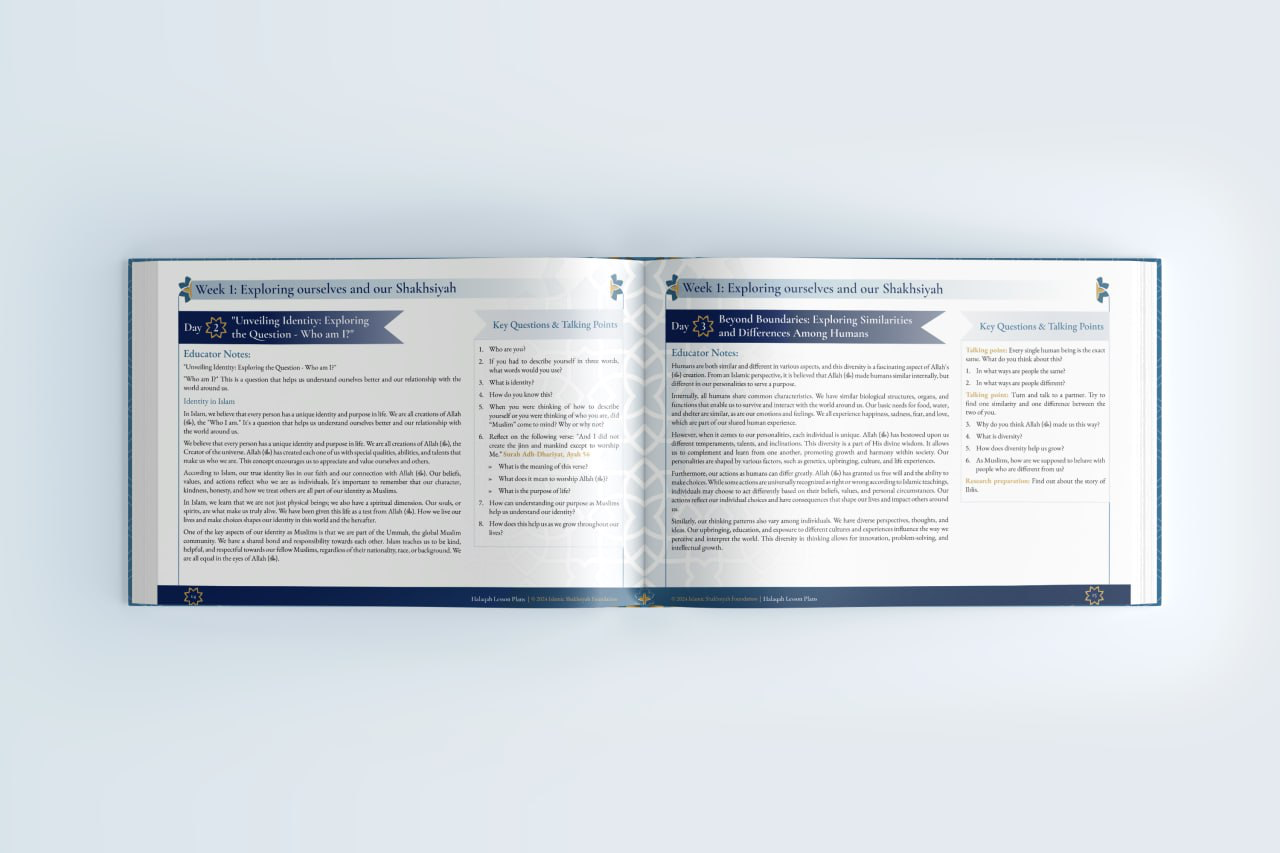
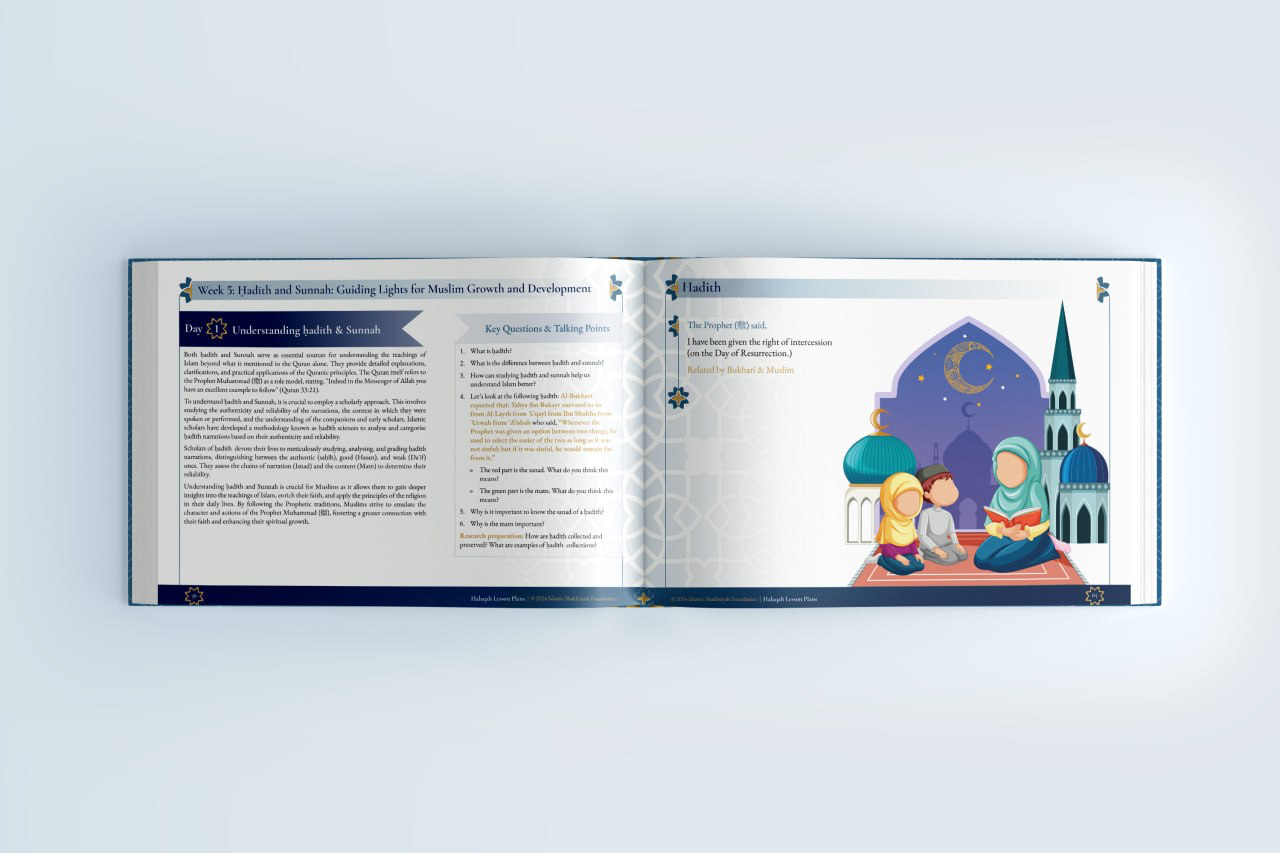
Moving & Growing is a ḥalaqah thematic unit for learners aged 8–9 years. The unit explores the concepts of movement and growth in all aspects of life. Learners reflect on the blessings of movement, appreciating how Allah (swt) has uniquely designed human beings and animals to move and grow. They explore movement in the world, including moving homes and countries. They look at the experiences of refugees and migrants, understanding how these journeys, although challenging, can foster resilience, renewal, and personal growth. These reflections will connect to the Prophet’s hijrah, which was the occasion for the famous ḥadīth: “Actions are by intentions.” Learners also explore what it means to move and grow towards Allah (swt) by engaging with the ḥadīth qudsi: “Whoever draws close to Me by the length of a hand, I will draw close to him by the length of an arm. Whoever draws close to Me by the length of an arm, I will draw close to him by the length of a fathom. Whoever comes to Me walking, I will come to him running,” inspiring them to strive toward Allah (swt) with sincerity and purpose in their lives.
The theme offers an opportunity to explore the Prophet’s sīrah. His life in Makkah, hijrah and establishing Islam in Madinah. In doing so, it emphasizes growth in multiple dimensions: personal growth through character development, physical growth, spiritual growth by deepening their connection with Allah (swt) and His Messenger (saw), family growth inspired by examples from the Prophet Muhammad’s (saw) family, and social and community growth modeled by the relationships between the Muhajirīn and al-Anṣār during the Makkan and Madinan periods. Learners explore Islam’s transformative message as a call to growth and movement, in terms of the Prophet’s (saw) daʿwah, his hijra as an act of migration and growth, and the movement and growth of many Muslims in our present times. Through these lessons, learners gain an understanding of movement and growth as essential elements of both personal and collective transformation.
Please note: Although each unit is written with a specific age group in mind, all of our units are highly adaptable and can be used effectively across multiple age ranges — right up to adult learners.
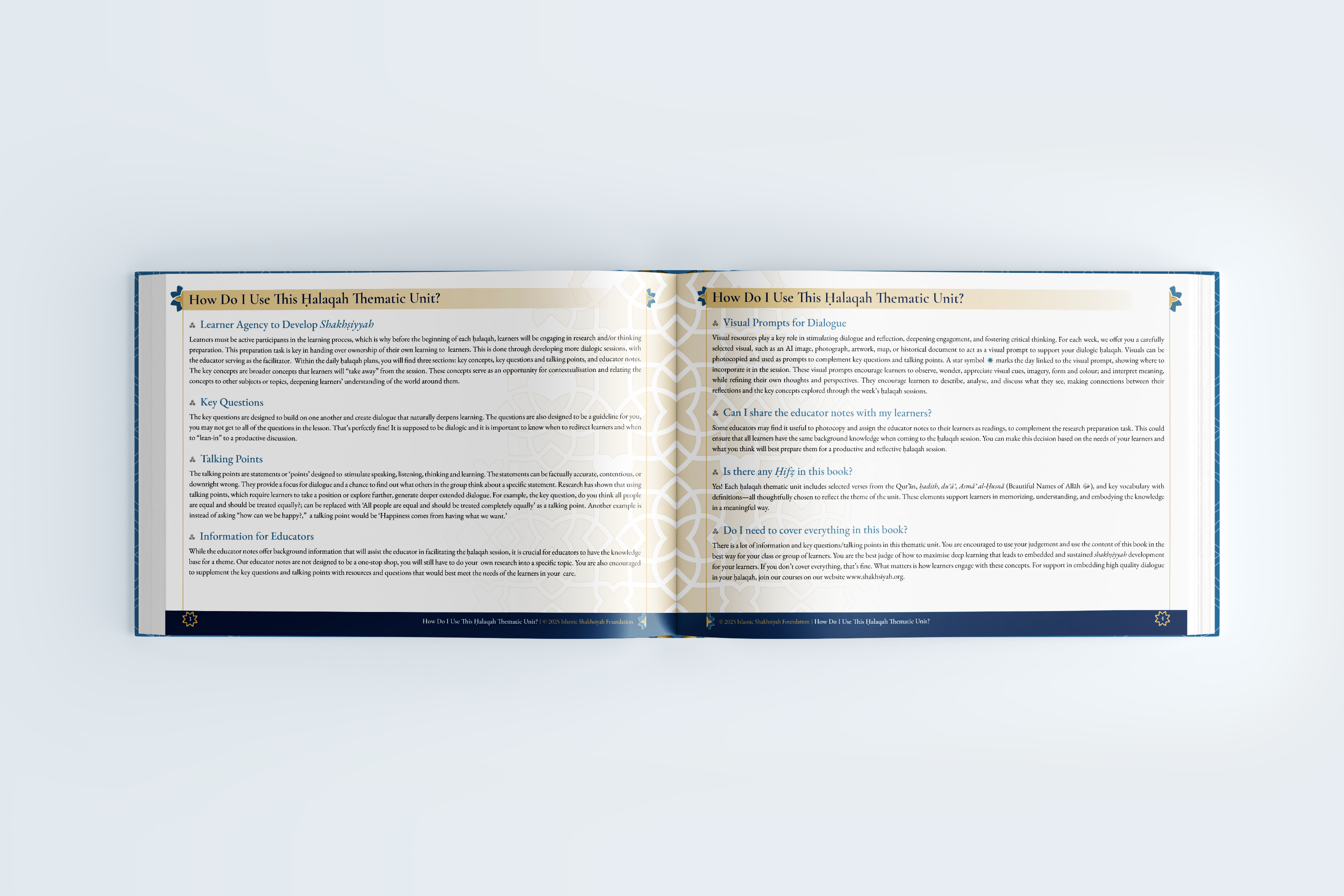
How does ḥalaqah work?
- Ḥalaqah is the pedagogy used by Prophet Muhammad (saw).
- During ḥalaqah, the educator and learners sit together on the floor, in a circle facing each other.
- Ḥalaqah begins with Bismillah and Qur’ān recitation and ends with a group duʿā’ which connects to the topic that has been discussed.
- All learners are encouraged to participate. Our ḥalaqah is dialogic – this means that learners engage in extended discussion amongst themselves with educators facilitating the dialogue through key questions and talking points.
- There is always room for direct instruction and storytelling, both of which are important. However, the main objective is to learn through dialogue drawing on the learners’ existing knowledge and building on it.
- Educators are primarily responsible for contextualization of the information in a way that meets the needs of their learners.
Please refer to our Dialogic Ḥalaqah: A Guide for the Muslim Educator on our website for more information about setting up ḥalaqah.
Need support with implementation? Our Dialogic Halaqah courses are carefully designed to support the effective implementation of our curriculum. They equip Islamic educators with the knowledge, confidence, and practical skills to bring dialogic halaqah into their classrooms and to nurture the shakhsiyah Islamiyah (Muslim personhood) of each learner through meaningful, reflective dialogue.
Explore our full range of courses here: https://ielc.learnworlds.com/courses
Reviews
There are no reviews yet.